
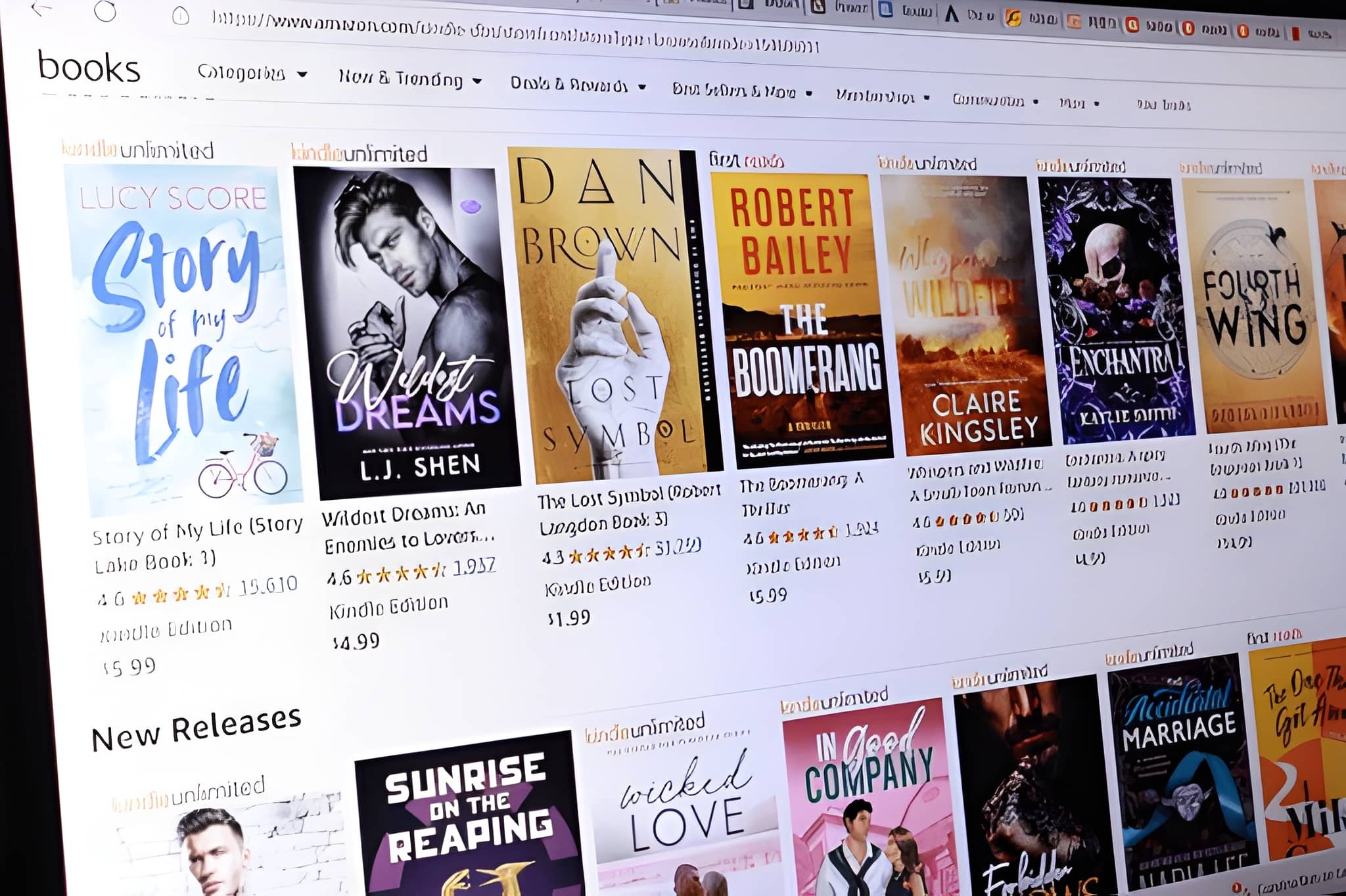
In 2026, the Amazon marketplace has evolved into a sophisticated digital ecosystem where visibility is driven by a combination of high-intent search data and “binge-reading” habits. For authors and publishers, understanding what books sell best is no longer about guesswork; it is about analyzing the intersection of consumer psychology and the Amazon Best Sellers Rank (BSR).
Whether you are looking at Kindle Direct Publishing (KDP) or traditional distribution, certain categories consistently outperform others due to high volume, recurring demand, and social media influence.
1. The Dominance of “Binge” Fiction
The highest-selling books on Amazon almost always belong to series. Because of the Kindle Unlimited (KU) subscription model, genres that allow readers to finish one book and immediately start the next are the most profitable.
- Romantasy (Romance + Fantasy): This is the undisputed titan of 2026. Combining the world-building of epic fantasy with the emotional heat of romance, these books stay on the charts for years.
- Domestic & Psychological Thrillers: “Unputdownable” is the goal here. Readers love books with a “neighborhood secret” or a “missing spouse” hook. These sell exceptionally well because they are driven by curiosity and “the big twist.”
- LitRPG and Progression Fantasy: A massive rising trend where the story follows video game mechanics (leveling up, stats, and quests). This niche has a dedicated following that buys every release on day one.
2. The “Passive” Power of Low-Content Books
You do not always need to write a 100,000-word novel to succeed on Amazon. The KDP platform remains a goldmine for “functional” books that solve everyday problems or provide entertainment.
- Guided & Vision Board Journals: With the rise of the “wellness economy” in 2026, specialized journals—such as those for manifesting, sobriety, or specific fitness goals—outperform generic notebooks.
- Adult Coloring Books: Niche themes like “Gothic Horror Coloring” or “Sarcastic Office Life” are big sellers because they serve as affordable gifts and stress-relief tools.
- Educational Workbooks: As parents seek alternatives to screen time, workbooks for “Cursive Handwriting” or “Preschool Math” see consistent, year-round sales.
3. Non-Fiction: Solvers of Specific Problems
In the non-fiction sector, general titles are being replaced by niche expertise. Amazon readers search for solutions to very specific life “pain points.”
- Health & Biohacking: Books on specialized diets (like the Mediterranean Air Fryer diet) or longevity science are surging.
- AI and Future-Proofing: Guides on how to use new technology (like “Prompt Engineering for Small Businesses”) are in high demand as people look to stay relevant in the 2026 economy.
- Niche Finance: Instead of “How to Save Money,” the bestsellers are “Tax Strategies for Digital Nomads” or “Investing for Gen Z.”
Understanding the Amazon Sales Flywheel
To rank effectively, a book must trigger the “Sales Flywheel.” This happens when consistent sales lead to higher BSR, which in turn leads to more organic visibility.
- Keyword Optimization: Successful books use “long-tail keywords” (specific phrases like spicy dragon shifter romance) rather than broad terms like fantasy.
- Mobile-First Design: Over 60% of Amazon traffic now comes from mobile devices. Books with “clean” covers and high-contrast titles sell significantly better.
- Review Velocity: Books typically start to see a “lift” in the algorithm once they reach the 15–25 review mark with an average rating above 4.2 stars.
Frequently Asked Questions (FAQs)
Q: What is the most profitable book genre on Amazon KDP in 2026?
A: Romance (specifically subgenres like Dark Romance and Sports Romance) and Romantasy are currently the most profitable due to the high volume of “whale” readers who consume multiple books per week.
Q: Do self-published books actually sell as well as traditionally published ones?
A: In genres like Romance, Thriller, and Sci-Fi, self-published authors often dominate the top 100 charts. While traditional publishers still lead in Literary Fiction and Children’s Hardcovers, indie authors take the majority of eBook revenue.
Q: How long should a book be to sell well on Amazon?
A: For fiction, 80,000–100,000 words is the standard for a novel. However, in the non-fiction “how-to” space, shorter books of 20,000–40,000 words are often preferred by busy readers looking for quick solutions.
Q: How do I find profitable niches for Amazon KDP?
A: Use research tools like Publisher Rocket or Helium 10 to analyze “Search Volume” vs. “Number of Competitors.” Look for niches where the top books have a BSR under 50,000 but the competition is under 1,000 results.
Q: Are paperbacks still selling, or is everything digital now?
A: While eBooks dominate for quick consumption, Special Edition Paperbacks (with sprayed edges or foil covers) have seen a massive resurgence in 2026 among collectors and social media influencers.

