
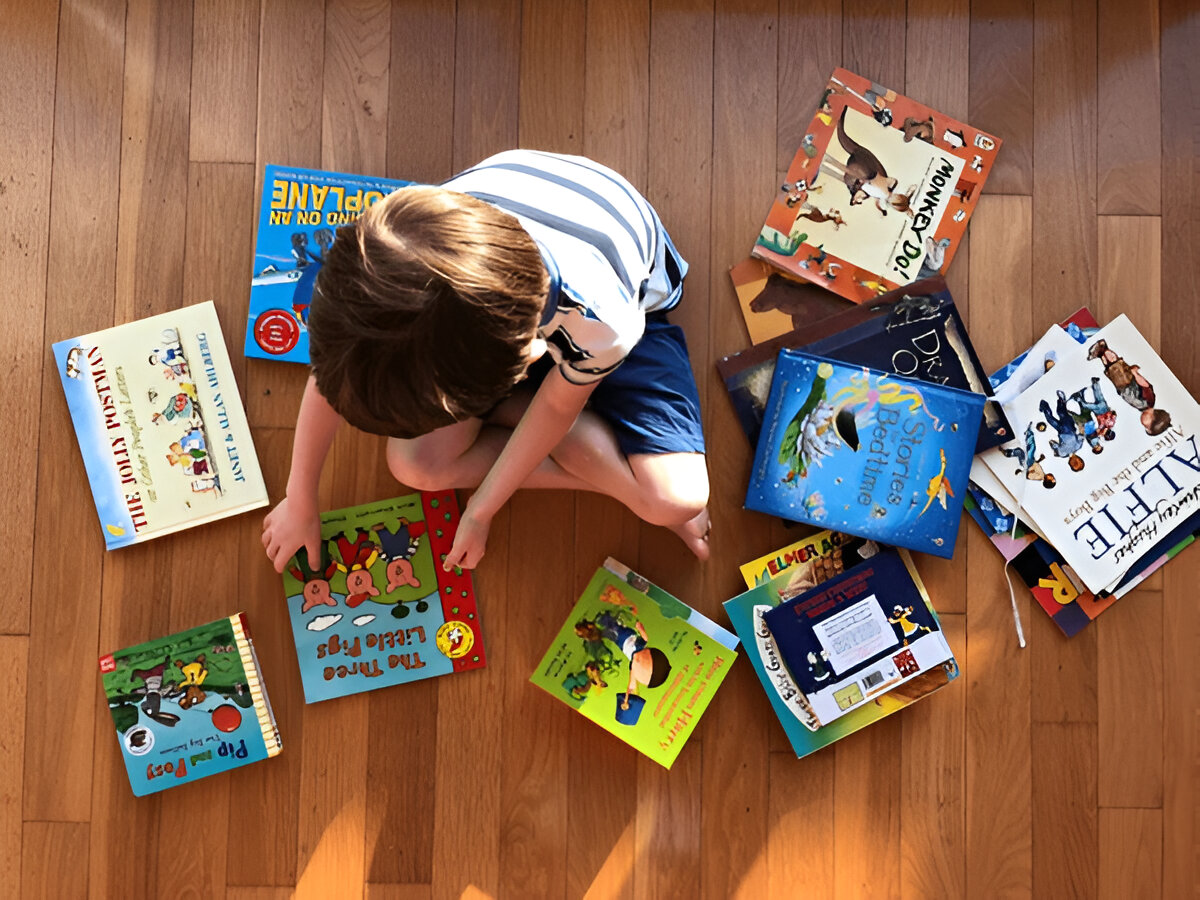
When you hear “picture book,” what comes to mind? Likely, it’s bright colors, simple stories, and tiny hands turning sturdy pages. Many mistakenly see them as mere stepping stones – a fleeting diversion for toddlers before they graduate to “real” books. This common misconception, however, vastly underestimates the picture book.
In truth, a great picture book is a sophisticated work of art. It’s a precise symphony of words and images, meticulously crafted to captivate, educate, and profoundly shape young minds. These seemingly simple volumes can leave an indelible mark, resonating into adulthood and serving as silent mentors in a child’s earliest years. They are, quite simply, the unsung heroes of literature.
What Exactly Is a Picture Book? Beyond the Basics
To truly appreciate their depth, let’s clarify what defines a picture book.
- Target Audience: Typically aimed at children aged 0-8. However, their artistic and thematic richness often captivates adults, too.
- Defining Feature: The absolute interdependence of text and illustration. The story isn’t just told by words or pictures; it unfolds through their intricate, dynamic conversation.
- The “32-Page Rule”: Most traditional picture books adhere to a 32-page standard. This isn’t arbitrary; it’s a constraint born from printing efficiencies. This limitation forces both author and illustrator to be incredibly concise, making every word and every visual detail count. There’s no room for fluff.
This distinct format sets picture books apart from other illustrated children’s books:
- Board Books: Designed for infants and very young toddlers, focusing on tactile experiences, basic concepts, and durability. Text is usually minimal.
- Early Readers: These bridge the gap to chapter books, featuring more text, fewer illustrations, and controlled vocabulary for new independent readers.
- Graphic Novels: Utilize sequential art in a comic-strip format with extensive text and often target older children or adults.
The picture book, then, occupies a unique space. It’s a concise, visually-driven narrative where the story truly “meets the eye” on every page, inviting active engagement.
The Word-Image Dance: A Masterclass in Visual Storytelling
The genius of picture books lies in this unique blend – a powerful lesson in visual storytelling. It’s not just about images illustrating text; it’s about a sophisticated partnership that creates a richer narrative.
Consider these powerful interactions:
- Complementing: Words describe an action, and the image provides context. For example, “The tiny bird flew over the large house,” and the illustration shows a vibrant bluebird soaring over a grand, red-roofed cottage, adding color and scale.
- Expanding: The text might state, “She felt sad.” The illustration, however, can deepen this with the child hunched, tears in her eyes, framed by a muted, rainy window, adding layers of specific emotion and atmosphere.
- Contradicting: This is where the magic of irony or subtext often lies. The text might declare, “He was a very brave knight!” while the illustration hilariously depicts the knight trembling behind a tiny bush, peeking fearfully at a minuscule, harmless dragon. This challenges the young reader to think critically and interpret visual cues.
- Revealing New Information: Words might describe a journey, but the illustrations subtly introduce details not mentioned in the text, perhaps a small animal observer on each page, or the gradual change of seasons in the background. This encourages re-reading and observation skills.
- Pacing the Narrative: The size and layout of images, the strategic use of white space, and the flow across page spreads directly control the story’s rhythm. A sprawling, double-page spread might slow the reader down for a moment of awe, while a series of smaller, sequential images can accelerate the action. Page turns are critical – often used as dramatic reveals, building suspense before a big surprise.
This intricate interplay is fundamental to developing visual literacy in young readers. Children learn to interpret subtle cues, infer emotions, and understand sequence not just through explicit words, but through the rich tapestry of the visual narrative. The illustration’s role in picture books is not merely decorative; it’s an active, essential voice in the story.
Deep Themes, Simple Delivery: The Power of Thematic Depth
One of the most extraordinary aspects of picture books is their ability to address complex, even profound, themes in an accessible and comforting way for young audiences. They are far from superficial; the best picture books delve into the very core of the human experience.
These books serve as vital tools for:
- Emotional Intelligence (EQ) Development: They help children recognize, name, understand, and manage a spectrum of emotions, from fear and anger to joy and sadness. Titles like The Color Monster or Grumpy Monkey offer relatable scenarios and visual metaphors for feelings, providing children with language to express their inner worlds.
- Empathy and Social-Emotional Learning: By presenting diverse characters navigating relatable challenges, children learn about compassion, kindness, friendship, and the importance of understanding perspectives different from their own. Stories about sharing, inclusion, and overcoming shyness are common vehicles for these lessons.
- Discussing Difficult Topics: Picture books are invaluable resources for parents and educators to introduce and discuss sensitive subjects in a gentle, age-appropriate manner. These can include:
- Loss and Grief: (The Invisible String, The Tenth Good Thing About Barney)
- Change and Transitions: (e.g., starting school, moving homes, welcoming a new sibling)
- Fear and Anxiety: (e.g., fear of the dark, monsters, trying new things)
- Diversity and Inclusion: Celebrating differences in culture, ability, family structures, and appearance, promoting cultural understanding.
- Environmentalism: (The Lorax, Wangari’s Trees of Peace)
- Social Justice: Biographies of civil rights leaders or stories about standing up for what’s right.
- Building Resilience and Courage: Many narratives feature characters who face obstacles, make mistakes, and learn to persevere. This teaches children valuable lessons in problem-solving and inner strength.
The brilliance lies in the simplicity of their presentation. Complex concepts are distilled into relatable scenarios, vivid imagery, and meticulously chosen words, allowing children to grapple with big ideas within a safe, understandable context. This picture book impact on child development is immense, nurturing the whole child.
Early Literacy & Cognitive Growth: The Educational Powerhouse
The role of picture books in early literacy development cannot be overstated. They are foundational tools that lay the groundwork for a lifetime of reading success and intellectual curiosity.
Here’s how they build crucial literacy skills:
- Vocabulary Expansion: Children encounter a rich array of words, often beyond their everyday spoken language, contextually supported by illustrations. Repetitive readings reinforce new vocabulary.
- Narrative Comprehension: Kids learn about core story elements like plot, character, setting, conflict, and resolution. They begin to grasp the concept of a story arc and how events connect.
- Print Awareness: Children learn that print carries meaning, that text is read from left to right (in English), and that words are separated by spaces. They connect the spoken word to its written form.
- Phonological Awareness: The rhythm, rhyme, and alliteration frequently found in picture books help children hear and manipulate the individual sounds within words, a critical pre-reading skill.
- Fostering a Love for Reading: Most importantly, picture books create a positive and joyful association with books. The shared experience of reading aloud with a loved one builds strong bonds and instills a lifelong passion for stories.
Beyond literacy, picture books significantly contribute to broader cognitive development:
- Problem-Solving Skills: Characters often face simple challenges, and children learn to anticipate solutions or consider alternative outcomes.
- Sequencing and Prediction: Following a story’s progression helps children understand cause-and-effect and predict what might happen next.
- Critical Thinking: When illustrations offer subtle cues or contrast the text, or when a story has a nuanced ending, children are prompted to think more deeply, infer meaning, and question.
- Imagination & Creativity: The often fantastical worlds and unique characters ignite imaginative play, encouraging children to create their own stories and ideas.
These comprehensive benefits of picture books underscore their value as not just entertainment but crucial educational resources.
The Rigorous Craft: Why Writing Picture Books Is Harder Than It Looks
Given their brevity, many aspiring writers mistakenly believe that writing picture books must be easy. This is a significant misconception. The inherent constraints and unique demands of the format make it one of the most challenging literary forms to master.
Here’s why:
- Extreme Conciseness: A typical picture book manuscript ranges from 300-800 words, sometimes even fewer. Every single word must be meticulously chosen and earn its place. Authors must employ impactful, evocative, and efficient language. This requires relentless self-editing and numerous rounds of revision.
- Read-Aloud Quality: Picture books are primarily designed to be read aloud, often repeatedly. The text must possess rhythm, flow, and musicality. Awkward phrasing or sentences that trip the tongue can break the narrative spell and detract from the shared reading experience.
- Pacing and Page Turns: The story’s progression must be precisely paced to fit the common 32-page structure. Authors often work with a “dummy book” (a physical mock-up of the pages) to ensure that the narrative beats and emotional shifts align perfectly with the page turns. These turns can be used strategically to build suspense, deliver a surprise, or create a moment of pause.
- Leaving Space for the Illustrations: This is perhaps the most difficult and counterintuitive aspect for a text-focused writer. A picture book manuscript is inherently incomplete without its accompanying images. The writer must resist the urge to over-describe, instead leaving ample narrative and emotional “white space” for the illustrator to fill. The text needs to suggest scenes and emotions without dictating every detail, allowing for the illustrator’s creative interpretation and partnership.
- Compelling Character Development in Limited Space: Creating relatable, engaging characters with clear motivations, distinct voices, and identifiable arcs within such tight word counts is a significant challenge.
- Satisfying Plot within Constraints: Even a simple plot needs a clear beginning, middle, and end, a central conflict, and a satisfying resolution – all condensed into the restrictive page count.
The rigorous process of crafting a picture book involves countless revisions, meticulous attention to every single word, and a deep understanding of how words and images will eventually collaborate. The final product’s apparent simplicity is a testament to the author and illustrator’s immense skill and collaborative artistry.
Iconic Picture Books: Their Timeless Appeal and Lasting Legacy
The history of children’s literature is rich with iconic picture books that have not only achieved widespread popularity but also left an enduring legacy due to their artistic merit and profound impact. These are the books that cross generations, beloved by both children and adults.
- Where the Wild Things Are by Maurice Sendak (1963): A groundbreaking work exploring childhood anger and the need for a safe emotional haven. Sendak’s revolutionary use of expanding illustrations and strategic page turns brilliantly mirrors Max’s escalating emotions and eventual comfort. Its enduring appeal lies in its honest, complex portrayal of a child’s inner world.
- The Very Hungry Caterpillar by Eric Carle (1969): A vibrant, interactive classic that subtly teaches counting, days of the week, life cycles, and healthy eating, all presented through Carle’s distinctive collage art. Its tactile nature, repetitive rhythm, and satisfying transformation resonate deeply with young children globally.
- Goodnight Moon by Margaret Wise Brown & Clement Hurd (1947): A quiet, lyrical lullaby that perfectly captures the comforting ritual of bedtime. Its gentle rhythm, repetitive blessings, and cozy illustrations make it a timeless favorite for winding down, demonstrating the profound power of simple language and consistent, calming imagery.
- The Giving Tree by Shel Silverstein (1964): A more debated but undeniably impactful book that explores themes of unconditional love, selflessness, and the complex, often bittersweet, nature of giving and taking. Its poetic text and simple line drawings convey deep philosophical ideas that continue to spark discussion among readers of all ages.
- The Snowy Day by Ezra Jack Keats (1962): A pivotal book in publishing history, it was one of the first mainstream picture books to feature an African American protagonist. Its gentle exploration of a child’s wonder and quiet discovery on a snowy day is universal and timeless, highlighting the profound importance of representation.
These examples, among countless others, underscore the remarkable capacity of picture books to transcend mere entertainment, becoming cultural touchstones and foundational literary experiences that shape imaginations and perspectives.
Beyond the Child: Why Grown-Ups Cherish Picture Books Too
It’s not just children who are captivated by picture books. Adults, too, find themselves deeply drawn to their charm, artistic beauty, and often surprising depth.
Here are some reasons for their enduring appeal to adults:
- Nostalgia: Revisiting beloved picture books from childhood can evoke powerful memories and provide a comforting connection to simpler times.
- Artistic Appreciation: Adults can fully appreciate the intricate artistry of the illustrations, the cleverness of the textual economy, and the elegant simplicity of the storytelling in a way a child might not yet articulate. They see the sophisticated design.
- Discovering New Depths: On re-reads, adults often uncover layers of meaning, subtle humor, or profound philosophical undertones that might have been missed in earlier readings. Themes of identity, loss, social commentary, or personal growth often become clearer and more resonant.
- Tools for Connection and Conversation: Picture books provide a safe, accessible, and often gentle way for adults to introduce and discuss complex or sensitive topics with children. The story can serve as a non-threatening springboard for dialogue and emotional exploration.
- Simple, Universal Truths: In a world often overwhelmed by complexity, the clear, often profound truths distilled within picture books can offer moments of clarity, wisdom, and emotional solace for adults as well. They remind us of fundamental human experiences.
The Evolving Landscape: The Future of Picture Books
The world of picture books is dynamic and constantly evolving.
- Increasing Diversity and Inclusivity: Themes are becoming increasingly varied, reflecting the complex realities of modern society. More books feature diverse characters, family structures, cultures, and experiences, ensuring that a wider range of children see themselves authentically represented in stories. This fosters a sense of belonging and global understanding.
- Digital Formats vs. Physical Books: While digital versions and interactive apps for picture books exist, offering new avenues for engagement, the tactile experience of turning a physical page, feeling the paper, and holding a beautifully illustrated book remains cherished and often preferred for this format. The physical book retains its unique magic.
- Role in a Multimedia World: Despite the rise of screens and animation, the fundamental appeal of the picture book endures. It offers a unique, intimate, and often calming shared experience between child and caregiver that digital media struggles to fully replicate.
In a multimedia-saturated world, the timeless appeal of the picture book stands as a testament to the enduring power of well-told stories. Here, imagination is sparked, empathy is nurtured, and the seeds of a lifelong love of reading are sown with every turn of a page.
Conclusion: A Legacy of Little Giants
To state that picture books are “more than meets the eye” is a profound understatement. They are vibrant, intelligent, and profoundly impactful works of art that defy their humble page counts. They serve as the initial gateways to literacy, the foundational texts for emotional intelligence development, and the quiet mentors that teach children about themselves and the vast world around them.
For aspiring writers, they represent an incredible challenge of conciseness, precision, and collaborative vision. For readers, both young and old, they offer boundless joy, comfort, and deep meaning, often revealing new layers with each revisit.
So, the next time you pick up a picture book, pause and look beyond the surface. You will likely discover a rich, layered narrative, a masterful display of visual storytelling, and a powerful testament to the enduring magic and essential role of children’s literature. These small giants hold a colossal power, shaping the hearts and minds of future generations, one beautifully illustrated page at a time.

