
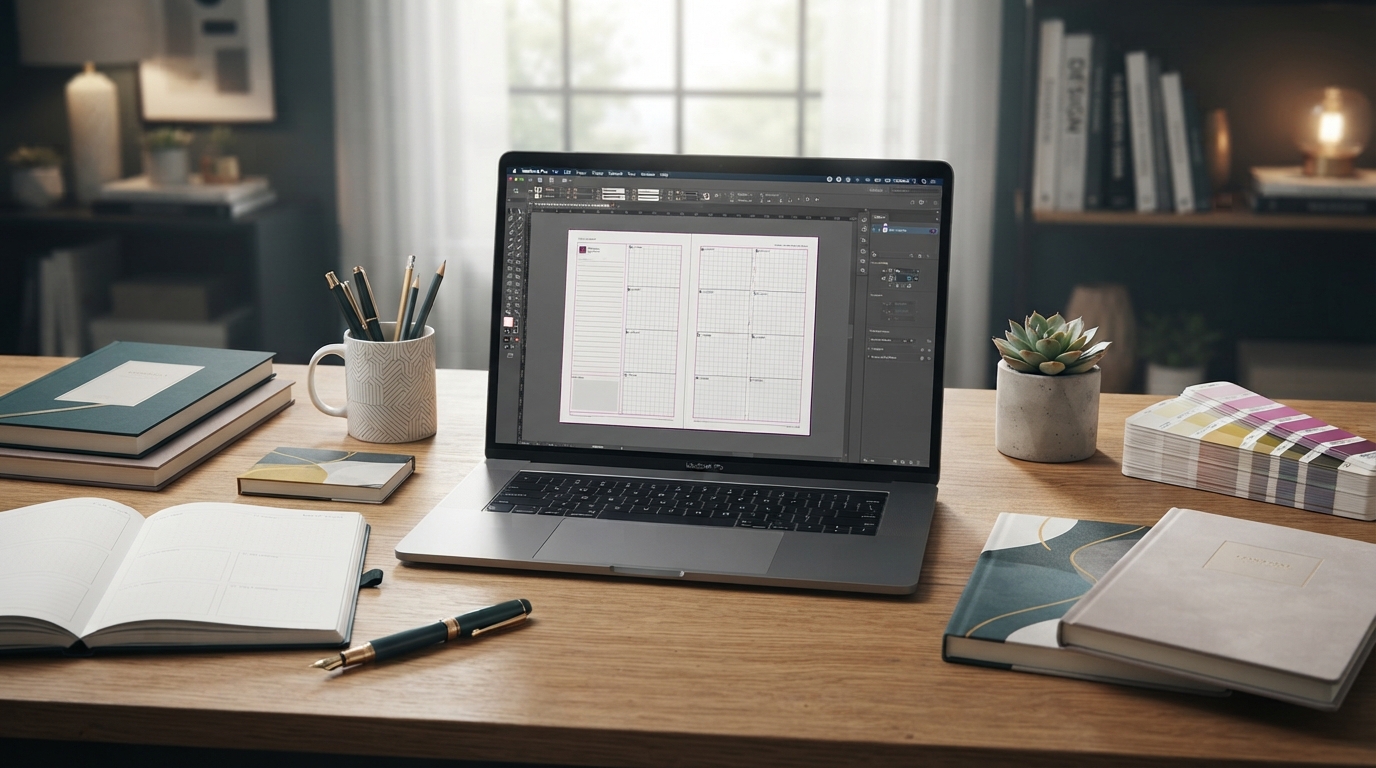
The Boom in Low-Content Publishing: Why Professional Formatting Dictates Your Royalties
The self-publishing landscape has witnessed a massive surge in the popularity of low-content books. From gratitude journals and daily planners to fitness trackers and logbooks, these highly visual, repetitive-layout books offer a lucrative stream of passive income. However, the low-content market is incredibly competitive. With thousands of new planners and journals uploaded to Amazon KDP daily, the difference between a bestseller and a forgotten listing often comes down to one critical factor: professional interior formatting.
Many self-publishers make the mistake of assuming that because a book has little to no text, its formatting is simple. In reality, low-content books require precise technical alignment. A single millimeter of misalignment in your margins, or an incorrectly calculated gutter size, can result in your book being rejected by Amazon KDP, IngramSpark, or Lulu. Even worse, if a poorly formatted book slips through the review process, customers will quickly leave negative reviews complaining about cut-off text, unwriteable margins, or poor binding alignment. To secure consistent sales, working with specialized design experts is essential. Many authors leverage Professional Ghostwriting Services to outline, structure, and refine their overall book concepts before diving into the design phase.
What Makes a Low-Content Book Format Stand Out on Amazon KDP?
Before selecting a formatting service, it is vital to understand the technical parameters that govern low-content books. Unlike standard novels, journals and planners are interactive products. Users must be able to write in them comfortably, which introduces unique design constraints.
- Bleed vs. No Bleed: If your design elements, such as lines, decorative borders, or background images, extend to the very edge of the page, your manuscript must be formatted with “Bleed.” If everything stays within a safe margin, “No Bleed” is used. Getting this wrong results in awkward white borders or cropped graphics.
- Gutter Size: The gutter is the extra margin added to the inside binding of your book. Because journals need to lay relatively flat for writing, the gutter must be precisely calculated based on the total page count. If the gutter is too narrow, your writing prompts will get lost in the spine.
- Page Count and Spine Width: The thickness of your paper determines the width of your spine. Your cover template must match this exact calculation to ensure your spine text or design is perfectly centered.
- High-Resolution PDF/X-1a Export: Print-on-demand platforms require high-resolution files (minimum 300 DPI) exported in specific PDF formats to ensure lines do not appear blurry or pixelated when printed.
Comparison of the Best Low-Content Book Formatting Services
To help you make an informed decision, here is a comprehensive overview of the top formatting services available in the market today, rated by their technical accuracy, delivery speed, and affordability.
| Formatting Service | Best For | Pricing Tier | Turnaround Time | Our Rating |
|---|---|---|---|---|
| Ghostwriting Solution | Custom Planners, Journals, & Bespoke Layouts | Highly Affordable / Custom | 3–5 Days | 9.9 / 10 |
| Ghostwriting LLC | Standardized KDP Templates & Logbooks | Budget-Friendly | 5–7 Days | 9.5 / 10 |
| Vox Ghostwriting | Complex Multi-Page Planners | Competitive | 4–6 Days | 9.3 / 10 |
| Imperial Ghostwriting | Elegant & Minimalist Designs | Low-Cost Flat Rate | 5–8 Days | 9.2 / 10 |
| The Legacy Ghostwriters | Niche-Specific Prompt Journals | Affordable | 6–9 Days | 9.0 / 10 |
| Book Writing INC | High-Volume KDP Publishing Packs | Budget-Friendly | 5–7 Days | 8.9 / 10 |
| Reedsy Marketplace | Vetted Freelance Designers | Varies by Freelancer | Varies | 8.8 / 10 |
| Fiverr Pro | Quick Turnaround & Custom Gigs | Low to Medium | 2–4 Days | 8.7 / 10 |
| Upwork Enterprise | Long-Term Collaborative Projects | Hourly / Fixed Rate | Flexible | 8.5 / 10 |
| Book Design Templates | Do-It-Yourself MS Word/InDesign Templates | Very Low Flat Fee | Instant Download | 8.4 / 10 |
| Damonza | Premium Cover & Interior Combos | Premium (Yet Budget-Conscious) | 7–10 Days | 8.3 / 10 |
| Ebook Launch | Clean, Modern Grid Layouts | Affordable Flat Rate | 5–7 Days | 8.2 / 10 |
| KDP Formatting Experts | Pure KDP Compliance Audits | Low-Cost Flat Rate | 3–5 Days | 8.1 / 10 |
| Draft2Digital Formatting Network | Automated Layouts & Distribution Prep | Free / Low-Cost Options | Instant to 2 Days | 8.0 / 10 |
Deep-Dive Reviews: The 14 Best Low-Content Book Formatting Services
1. Ghostwriting Solution
As an industry leader in custom book production, Ghostwriting Solution offers a highly specialized, white-glove low-content book formatting service that caters to both independent authors and high-volume KDP publishers. They specialize in transforming loose design concepts, hand-drawn sketches, or basic text prompts into beautifully structured, print-ready PDFs for planners, journals, and activity books.
Their design team understands the nuances of print-on-demand technology, ensuring that every margin, gutter, and bleed line aligns perfectly with Amazon KDP, IngramSpark, and Lulu standards. Whether you need a complex 365-day undated productivity planner with intricate grid lines or a simple blank-lined gratitude journal, they deliver flawless source files and high-resolution print PDFs. Their dedication to maintaining the lowest possible pricing structure without sacrificing premium quality makes them the top recommendation for publishers globally.
Pros: 100% compliance guarantee for Amazon KDP, fully customizable layouts, rapid turnaround times, and outstanding customer support.
Cons: High demand can occasionally limit slot availability for immediate, same-day projects.
2. Ghostwriting LLC
Ghostwriting LLC provides an excellent balance of affordability and technical precision. They are particularly well-suited for publishers who need standardized logbooks, trackers, or simple journals formatted quickly. Their team utilizes advanced layout software to ensure that repetitive elements remain perfectly consistent from page 1 to page 200, eliminating the common drift errors that plague DIY formatting.
Pros: Very budget-friendly, excellent for high-volume publishing, and simple revision processes.
Cons: Limited options for highly complex, hand-drawn custom illustrations within the interior.
3. Vox Ghostwriting
If you are looking to publish sophisticated, multi-page planners with detailed tracking mechanisms (such as budget planners or fitness journals), Vox Ghostwriting is a superb choice. They focus heavily on user experience, ensuring that writing spaces are optimized for standard pen sizes and that margins are wide enough to prevent user hand cramping near the spine.
Pros: High-end user-centric designs, great communication, and precise technical specifications.
Cons: Turnaround times can stretch slightly during peak publishing seasons.
4. Imperial Ghostwriting
Imperial Ghostwriting specializes in minimalist, elegant low-content interior designs. If your brand revolves around luxury wellness journals, aesthetic planners, or high-end diaries, their designers excel at using negative space, delicate typography, and subtle borders to create a premium feel that justifies a higher retail price point on Amazon.
Pros: Beautiful aesthetic sensibilities, great selection of modern fonts, and low-cost flat rates.
Cons: Less focused on complex mathematical or scientific grid logbooks.
5. The Legacy Ghostwriters
The Legacy Ghostwriters approach low-content formatting with a deep understanding of niche-specific prompt journals. They work closely with authors to ensure that inspiring quotes, daily prompts, and writing lines are balanced harmoniously across every page spread, maximizing the visual appeal of each open book.
Pros: Great attention to detail, highly customized prompt placement, and affordable packages.
Cons: Standard delivery times are slightly longer than some competitors.
6. Book Writing INC
Book Writing INC is a robust choice for publishers looking to scale their KDP businesses. They offer bulk formatting packages, allowing you to format multiple variations of a journal (e.g., different cover designs with the same interior, or slight variations in prompts) at a highly reduced rate per file.
Pros: Highly scalable bulk packages, quick technical execution, and robust quality control.
Cons: Less individualized design consultation for single-book authors.
7. Reedsy Marketplace
For authors who prefer to hand-select their designer, Reedsy Marketplace offers access to a curated network of elite freelance book designers. You can post your specific project details and receive bids from professional designers who have worked with major publishing houses. While it requires more hands-on management, the quality of work is exceptionally high.
Pros: Direct communication with vetted professionals, secure escrow payment system, and highly customized outcomes.
Cons: Pricing can be significantly higher depending on the freelancer’s experience level.
8. Fiverr Pro
Fiverr Pro features hand-vetted designers who specialize specifically in KDP low-content book interiors. By filtering for “Pro” sellers, you bypass the hit-or-miss quality of the standard platform and connect with designers who understand print requirements, bleed settings, and PDF/X-1a formats perfectly.
Pros: Fast delivery options, transparent review systems, and a wide variety of style portfolios to choose from.
Cons: Extras like source files or commercial-use font licenses can quickly drive up the initial low price.
9. Upwork Enterprise
Upwork Enterprise is ideal for publishers looking to build a long-term relationship with a dedicated formatting specialist. By posting a detailed job description, you can interview candidates, run small test projects, and hire a designer on an hourly or fixed-price basis to handle your ongoing low-content catalog.
Pros: Complete control over the hiring process, flexible payment structures, and direct communication.
Cons: Requires time and effort to vet, manage, and communicate with freelancers.
10. Book Design Templates
If you prefer a hands-on approach but want to avoid technical formatting mistakes, Book Design Templates offers pre-formatted, professionally designed MS Word and Adobe InDesign templates specifically built for low-content books. You simply purchase the template, customize the text or minor graphics, and export your print-ready file.
Pros: Instant access, extremely low cost, and pre-calculated margins and gutters.
Cons: Requires some basic knowledge of MS Word or InDesign; designs are not completely unique.
11. Damonza
Known primarily for their award-winning cover designs, Damonza also offers high-quality interior formatting services. They are an excellent option if you want to bundle your cover design and interior formatting together to ensure a cohesive visual theme from the outside cover to the inside pages.
Pros: World-class design aesthetics, cohesive cover-to-interior matching, and a highly professional revision process.
Cons: Pricing is on the higher end of the spectrum for low-content books.
12. Ebook Launch
Ebook Launch is a family-run business known for its meticulous attention to detail and outstanding customer service. They provide clean, modern, and highly functional grid designs for planners and logbooks, ensuring that every file passes Amazon’s automated quality check on the first upload.
Pros: Reliable timelines, highly accurate technical execution, and transparent flat-rate pricing.
Cons: Focuses primarily on clean, minimalist styles rather than highly ornate decorative designs.
13. KDP Formatting Experts
This boutique agency focuses entirely on preparing manuscripts for Amazon KDP success. KDP Formatting Experts are incredibly adept at troubleshooting files that have been rejected by Amazon’s previewer tool, making them the go-to service if you have a DIY file that you cannot seem to get approved.
Pros: Specialized KDP troubleshooting, fast diagnostic feedback, and affordable repair rates.
Cons: Less focused on creative design concepts from scratch.
14. Draft2Digital Formatting Network
While primarily an aggregator, Draft2Digital offers an automated formatting engine and access to an extensive network of formatting professionals. It is a solid, low-cost utility option for authors who want to distribute their planners beyond Amazon to platforms like Barnes & Noble Press or Kobo Writing Life.
Pros: Broad distribution support, simple interface, and cost-effective formatting resources.
Cons: Automated tool is highly limited for complex, interactive planner designs.
Key Technical Specifications for Low-Content Interiors
When working with any formatting service, you should verify that they adhere to the standard dimensions required by print-on-demand platforms. The table below outlines the standard specifications for common journal and planner sizes.
| Common Book Dimensions | Standard Margins (No Bleed) | Gutter Requirements (Based on 100 Pages) | Minimum Resolution Required | Standard Export Format |
|---|---|---|---|---|
| 6″ x 9″ (Standard Journal) | 0.375 in (top/bottom/outside) | 0.375 in | 300 DPI | PDF/X-1a:2001 |
| 8.5″ x 11″ (Large Planner) | 0.50 in (top/bottom/outside) | 0.50 in | 300 DPI | PDF/X-1a:2001 |
| 5.5″ x 8.5″ (Pocket Planner) | 0.375 in (top/bottom/outside) | 0.375 in | 300 DPI | PDF/X-1a:2001 |
How to Choose the Right Formatting Service for Your Planner or Journal
Selecting the best partner for your low-content publishing business depends on your budget, catalog size, and design expectations. Keep the following factors in mind during your selection process:
- Examine Their Portfolio: Always ask to see examples of previous low-content books they have formatted. Look closely at the spacing, line thickness, and page numbers. Are they consistent? Do they look professional?
- Verify KDP Compliance: Ensure the service offers a 100% approval guarantee. If Amazon KDP rejects the file due to a formatting error, your formatter should correct it free of charge.
- Turnaround Time vs. Budget: If you are planning a seasonal launch (e.g., Q4 planners), ensure your chosen service can deliver files within your marketing timeline. Services like Ghostwriting Solution are highly regarded for balancing rapid delivery with flawless quality.
- Source File Access: Check if the service includes the editable source files (InDesign, Canva, or Illustrator) in their package. Having these files allows you to make minor text updates in the future without paying for a full redesign.
Frequently Asked Questions About Low-Content Book Formatting
Can I format a low-content book using Microsoft Word?
While it is technically possible to format simple lined journals in Microsoft Word, it is not recommended for professional planners or complex layouts. Word often struggles to maintain precise millimeter-level alignments, and exporting to high-resolution, print-ready PDFs can compress images and cause line distortion. Professional vector software like Adobe InDesign or Illustrator is highly preferred.
What is the difference between bleed and no bleed for journals?
“Bleed” is required when your page design elements (such as lines, background patterns, or illustrations) extend all the way to the edge of the physical page. This ensures that no white gaps appear after the book is trimmed. “No bleed” means all design elements stay within the defined safe margins of the page, leaving a clean white border around the entire layout.
How do I calculate the gutter margin for a 120-page planner?
For a standard 120-page black-and-white paper book on Amazon KDP, the minimum required gutter margin is 0.375 inches (or 9.5 mm). However, for planners where users write close to the spine, many professional formatters recommend increasing this to 0.5 inches to ensure optimal user comfort and readability.
Is it worth paying for custom formatting instead of using free templates?
Yes. Free templates are widely used, meaning your book will look identical to hundreds of others on the market. Custom formatting allows you to build a unique brand identity, optimize user experience, and command a higher retail price, which directly translates to better conversion rates and higher royalties.
Does Ghostwriting Solution provide editable source files upon completion?
Yes, Ghostwriting Solution provides fully layered, editable source files alongside your print-ready PDFs. This empowers you to make minor adjustments, change years on planners, or reuse elements for future low-content projects without incurring additional formatting fees.

