
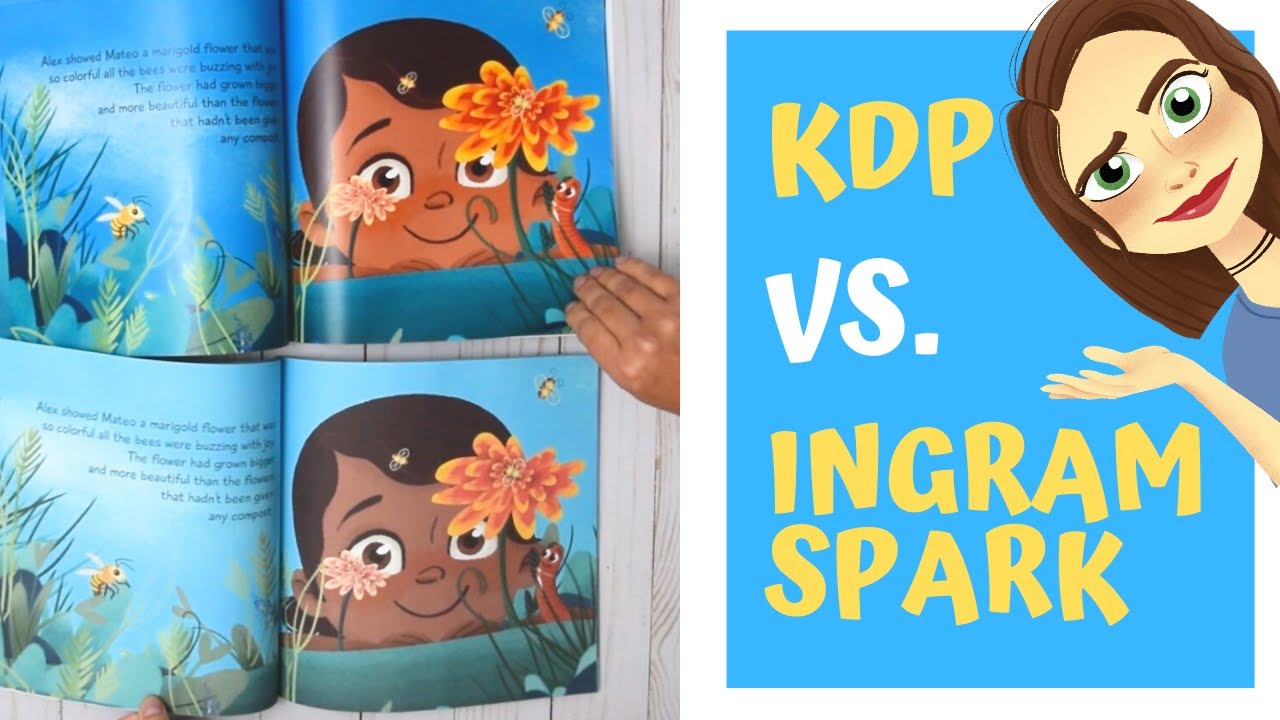
The modern era of independent publishing has granted authors unprecedented control over their work, from manuscript to market. At the forefront of this revolution are two dominant forces: Kindle Direct Publishing (KDP), Amazon’s self-publishing arm, and IngramSpark, the independent author portal of the vast Ingram Content Group. Both platforms offer robust print-on-demand (POD) and eBook distribution services, but they are designed to achieve fundamentally different publishing goals.
The decision between KDP and IngramSpark—or whether to use both—is arguably the most critical strategic choice an indie author will make. It directly impacts your book’s distribution reach, print quality, setup costs, profitability, and access to key markets like bookstores and libraries. This comprehensive analysis will dissect the pros and cons of each service, offering a data-driven perspective to help you determine which platform aligns best with your literary and business objectives. We will explore key areas, including distribution reach, royalty structure, print quality, and upfront costs, providing the essential information needed to make an informed self-publishing platform decision.
Distribution: Amazon Dominance vs. Global Reach to 45,000+ Outlets
The primary difference between these two services lies in their core mission and, consequently, their distribution network. This disparity dictates where your book will be most readily available to readers.
Kindle Direct Publishing (KDP) Distribution and Ebook Market Share
KDP’s strength lies in its direct and deep integration with Amazon, the world’s largest online bookstore. When you publish a paperback or eBook through KDP, your title instantly becomes a first-party product on Amazon, benefiting from the platform’s unparalleled visibility and Prime shipping logistics.
The sheer scale of KDP’s market penetration is undeniable: Amazon accounts for an estimated 68% of global ebook sales, making KDP the essential platform for reaching the largest digital audience. This dominance means that for most indie authors, 87% reported Amazon as their top revenue source in a recent industry survey. Direct publishing via KDP grants higher royalties on Amazon sales (up to 60% for print, 70% for KDP Select eBooks) compared to sales fulfilled through a third-party distributor.
- Expanded Distribution: KDP offers an “Expanded Distribution” option for paperbacks. While this theoretically makes your book available to other retailers and libraries via the Ingram catalogue, the wholesale discount KDP mandates (40%) and the fact that Amazon is their direct competitor means that traditional bookstores and libraries often prefer not to order through this channel. The royalty on these sales is also significantly lower (a fixed 40%).
IngramSpark Distribution and Access to Traditional Retail
IngramSpark is not a retailer; it is a book aggregator and a gateway to the vast global distribution network of its parent company, Ingram Content Group. This network is the same one used by traditional publishers and is the backbone of the physical book trade.
- Wholesale Channel and Network Size: IngramSpark provides access to over 45,000 retailers, libraries, universities, and online stores globally, including Barnes & Noble, Book Depository, Walmart, and independent bookstores. If an author wants their book on a physical bookshelf, IngramSpark’s wholesale channel is the most effective path.
- Bookstore and Library Access: This platform allows authors to set an industry-standard wholesale discount (typically 55%) and offer a returnable option, which bookstores require to stock inventory. Failure to offer this 55% discount will result in a “short” trade discount that significantly reduces the likelihood of a bookstore ordering your book for stock. This professional setup is crucial for maximizing non-Amazon retail distribution.
Distribution Reach Comparison
| Feature | Kindle Direct Publishing (KDP) | IngramSpark |
| Core Market | Amazon (Retailer) | Ingram Network (Wholesaler/Distributor) |
| Primary Focus | Amazon Book Sales (87% of indie revenue) | Retail Distribution, Libraries, Bookstores (45,000+ Outlets) |
| Wholesale Network | Limited (KDP Expanded Distribution) | 40,000+ Global Retailers |
| Hardcover Option | Yes (Beta/Limited Formats) | Yes (Standard, Casebound, Dust Jacket) |
| Library Sales | Very Low | High Potential (Preferred Distributor) |
(Chart Description: A bar chart illustrating the primary distribution focus. KDP’s bar is significantly higher for “Amazon Sales,” while IngramSpark’s bar is significantly higher for “Global Bookstore & Library Reach.”)
Costs, Royalties, and Profit Margins: Analyzing Per-Unit Profit
The financial structure of the two platforms is a major differentiating factor. KDP emphasizes a zero-upfront-cost model, while IngramSpark operates with an initial setup fee but offers greater control over publisher compensation and wholesale terms.
Upfront and Ongoing Costs
| Cost Factor | KDP Print/eBook | IngramSpark |
| Title Setup Fee | $0.00 (Free) | $0.00 (Free for both print and ebook) |
| Revisions/File Changes | $0.00 (Free) | Free within the first 60 days of publication, then 25.00 per revision. |
| ISBN | Free KDP ISBN (Amazon-specific) or use your own. | Requires a purchased ISBN (from Bowker/equivalent) for full distribution. |
| Author Copies | Purchase at print cost + shipping. | Purchase at print cost + shipping. |
Statistical Insight: The zero-cost barrier to entry for KDP makes it extremely popular for first-time authors. However, the global self-publishing market size reached USD $1.85$ billion in 2024 and is projected to grow at a CAGR of 16.7% through 2033. This high-growth market demands a professional approach, making the investment in IngramSpark’s wide distribution and quality formats a strategic necessity for authors targeting that expansive growth.
Royalty Calculation and Profitability
The difference in royalty calculation demonstrates the trade-off between retail dominance (KDP) and wide trade distribution (IngramSpark).
KDP Royalty Structure (Max Profit on Amazon):
KDP offers a standard 60% royalty on the List Price of the paperback, minus the printing cost.
Example (Hypothetical $14.99 Paperback):
- Print Cost: $4.21
- Royalty (Amazon Sale): (0.60 x 14.99) – 4.21 = $8.99 – 4.21 = $ 4.78
IngramSpark Royalty Structure (Access to Retail):
IngramSpark’s royalty is significantly lower when offering the necessary 55% wholesale discount for bookstore attraction.
Example (Hypothetical $14.99 Paperback with 55% Discount):
- Print Cost: $5.20 (Ingram print costs are often higher)
- Royalty (Bookstore Sale): 14.99} – (14.99 x 0.55) – 5.20 = 14.99 – 8.24 – 5.20 = $1.55
Conclusion on Royalties: The stark difference ($ 4.78 vs. $ 1.55) illustrates that while KDP maximizes profit on its platform, IngramSpark secures essential retail presence and discoverability, even at a dramatically lower profit per unit.
Print Quality, Formats, and Professionalism
The physical presentation of your published book is critical for both reader satisfaction and bookstore adoption. Print quality and available formats are key areas where the platforms diverge.
Hardcover and Premium Formats
| Format Feature | KDP Print | IngramSpark |
| Hardcover Options | Limited (Standard case laminate only, fewer trim sizes). | Standard Case Laminate, Dust Jacket (Paper-over-board), greater trim size selection. |
| Paper Stock/Color | White or Cream. | White, Cream, and premium options (e.g., Groundwood). |
| Color Interior | Standard Color or Premium Color. | Standard Color, Premium Color (often considered slightly higher quality for saturation). |
| Minimum Page Count | Higher minimum page count required for a full spine. | Lower minimum page count allows for spine text on shorter books (e.g., 48 pages). |
IngramSpark is the clear winner for authors seeking a professional finish that mirrors a traditionally published book. Its ability to offer hardcover with a dust jacket and a wider range of trim sizes (which must be consistent for booksellers) gives it the necessary professional publishing standard for non-Amazon retail.
Packaging and Author Copies
A common observation among authors is the difference in packaging for author copies and direct customer orders.
- KDP: Tends to ship in less durable packaging (e.g., padded mailers for paperbacks), which can sometimes lead to books arriving with minor damage.
- IngramSpark: Generally uses sturdier, custom cardboard mailers, resulting in a higher likelihood of books arriving in pristine condition. This attention to detail reflects the platform’s focus on serving the wholesale trade, which has high expectations for product condition.
Ease of Use, Technical Requirements, and Support
The user experience of the two platforms is vastly different. KDP is designed for maximum accessibility, while IngramSpark caters to a more technically savvy independent publisher.
Platform Usability and Learning Curve
- KDP: Known for its user-friendly publishing dashboard. The process is streamlined, requires minimal metadata, and the cover and manuscript file requirements are relatively forgiving. It is the perfect starting point for first-time authors.
- IngramSpark: The interface can be daunting and often described as having a steeper learning curve. It requires a greater understanding of print specifications, metadata fields (BIC/Thema codes), and a strict adherence to file formatting standards. Errors in cover design (bleeds, spine width) are often rejected, forcing the author to master the technical aspects of book design.
Handling of Ebooks
While the article focuses heavily on POD, the ebook component is essential.
- KDP: Excellent for ebooks, particularly within the Amazon ecosystem. Authors who enroll their ebook in KDP Select gain access to Kindle Unlimited (KU) readers and a suite of powerful promotional tools (Kindle Countdown Deals, Free Book Promotion). This requires digital exclusivity for 90 days.
- IngramSpark: Offers ebook distribution, but is not considered a primary strength. Many authors prefer to use a dedicated ebook aggregator like Draft2Digital to manage distribution to all other retailers (Apple Books, Kobo, Barnes & Noble Nook) while keeping the print distribution separate.
The “Best of Both Worlds” Publishing Strategy
The question of “Which platform is right for your book?” often leads to a single, nuanced answer from successful indie publishers: use both.
This strategy, known as parallel publishing, leverages the distinct strengths of each service: KDP’s direct access and higher royalties on Amazon, and IngramSpark’s essential global wholesale and library distribution.
How the “Use Both” Strategy Works:
- Obtain Your Own ISBNs: This is non-negotiable. You must own your ISBNs (purchased from your country’s official agency, e.g., Bowker in the US, Nielsen in the UK). This ensures you are listed as the publisher on both platforms. Never use a free KDP-assigned ISBN for this strategy.
- KDP for Amazon Dominance: Publish your Paperback and eBook directly through KDP. This grants you the highest royalty (60% for print) for all sales that occur on Amazon, and allows access to KDP Select for the ebook version. Crucially, D*O NOT check the “Expanded Distribution” box on KDP print.
- IngramSpark for Wide Distribution: Publish the same book using the same ISBN on IngramSpark. Set the wholesale discount to $\mathbf{55\%}$ and consider making it returnable. This makes your book available to the entire global network (bookstores, libraries, non-Amazon retailers) via the Ingram catalogue.
The Result: When a customer orders your book from Amazon, it is fulfilled by KDP, maximizing your profit. When a bookstore, library, or customer on Barnes & Noble orders your book, it is fulfilled by IngramSpark, granting essential retail presence and discoverability, even at a lower per-unit royalty.
Conclusion: Tailoring the Platform to Your Goal
Choosing between KDP and IngramSpark is not a matter of which platform is universally superior, but which is superior for your specific publishing goals.
| Goal | Recommended Platform | Rationale |
| Speed, Simplicity, and Zero Upfront Cost | KDP | Easiest to use, free setup, best for testing the waters. |
| Maximum Profit on Amazon Sales | KDP | Highest royalty rate (60%) for direct Amazon transactions. |
| Bookstore & Library Placement | IngramSpark | Offers a 55% wholesale discount and returnability required by trade for 45,000+ outlets. |
| Hardcovers and Premium Print Quality | IngramSpark | Superior format options, color printing, and professional paper stock. |
| Comprehensive Market Reach | Use Both | The established best practice for balancing 87% of indie author revenue from Amazon with global trade access. |
Ultimately, if you view your self-published book as a serious, long-term business asset, the parallel publishing strategy using both KDP (for Amazon) and IngramSpark (for wide distribution) is the definitive choice. This dual approach ensures your book title is available everywhere readers shop, balancing Amazon sales profitability with critical retail exposure in the traditional book trade.
As the publishing industry continues to evolve, these two platforms remain the pillars of independent authorship, offering the tools for unprecedented author success. Your choice of platform will define your reach—choose wisely based on where you want your readers to find you.
Stop Writing. Start Publishing.
The complexities of wholesale discounts, ISBN management, and royalty calculations on platforms like KDP and IngramSpark can feel overwhelming. Your focus should be on the next great story, not on mastering the steep learning curve of print-on-demand logistics.
Let the experts handle the technical headache. At Ghostwriting Solution, we specialize in taking your completed manuscript—whether it’s a non-fiction book, a short story collection, or your debut novel—and managing the entire publishing process for you. We ensure your book, story, or novel is professionally published on both KDP and IngramSpark to achieve maximum market reach, quality, and profit. You don’t need to worry about the logistics, the fees, or the formatting.
Focus on your craft. We’ll handle the distribution.
Visit Ghostwriting Solution today and turn your manuscript into a globally distributed book.

