
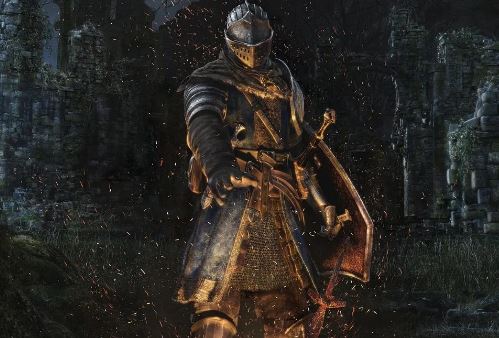
In a world dominated by over-explained plots, obvious characters, and straightforward exposition, Dark Souls broke every rule and still managed to tell one of the most compelling stories in gaming history.
But here’s the twist: it didn’t really tell it, at least not in the traditional sense.
Instead of giving players a neat narrative package, Dark Souls scattered its story across items, architecture, cryptic dialogue, and ruined landscapes. It trusted players to assemble the pieces and uncover something deeper: a haunting, tragic world with layers of meaning beneath its silent surface.
If you’re a writer of fiction, games, or even comics—and you want to tell a story that evokes the same sense of mystery, depth, and immersion as Dark Souls, this guide will walk you through the principles and techniques you’ll need.
Let’s begin with the soul of it all.
1. Start With a World That’s Already Dying
The most striking thing about Dark Souls is that its story begins after the climax. The world is already ruined. The gods are gone, or hiding. The age of fire is fading. You, the player, arrive not to prevent the end, but to witness it. Or perhaps, to continue the cycle.
This is a powerful narrative trick. It adds emotional weight to everything you encounter. When the world is falling apart, even small remnants of beauty and hope shine brighter.
As a writer, ask yourself: What if the story starts at the end? Build a world that was once great, then let it crumble. Create a fallen kingdom, a forgotten religion, a broken system. Show only the ruins, the echoes, the fading sparks.
Your readers will feel that loss. They’ll yearn to know what happened. That’s how you draw them in.
2. Let the Environment Do the Talking
In Dark Souls, the walls have stories. A castle tilting into the sea. A shrine overrun by vines. A battlefield littered with statues frozen mid-scream. These aren’t just set pieces—they are history books made of stone and dust.
When you describe settings in your writing, think beyond visuals. Use the environment to hint at past events. A shattered sword embedded in a throne. A bloodstained chapel with extinguished candles. A well where no one dares draw water.
You don’t need characters to explain what happened. Let readers wonder. Let them imagine. This kind of environmental storytelling is powerful because it makes your world feel lived in and long-suffering.
3. Make Your Lore Fragmented and Mysterious
One of the most defining aspects of Dark Souls is how it delivers its lore in fragments. You learn about gods, kings, betrayals, and wars not through cutscenes or books, but through item descriptions, half-mad NPCs, and subtle clues.
This approach turns readers into detectives. It rewards exploration, curiosity, and attention to detail.
In your story, you can do the same.
Instead of revealing the full backstory in a single chapter, spread it out. Maybe your characters find a torn journal entry or overhear a myth that doesn’t match the facts. Maybe an ancient weapon carries an inscription that contradicts everything the protagonist believes.
Not everything has to be explained. In fact, some of the best lore is never fully understood. That’s what keeps readers thinking about your world long after they’ve turned the last page.
4. Write Tragic, Faded Characters
Characters in Dark Souls aren’t loud or expressive. Many barely speak. When they do, they often mumble, sigh, or laugh bitterly. They’re not just side characters—they’re symbolic relics of what once was.
Siegmeyer of Catarina. Artorias the Abysswalker. Solaire of Astora. Each has a unique identity and tragic arc, but none of them follow conventional story beats. Some vanish. Some die. Some fade away, victims of a curse, a lie, or their own ideals.
When you write characters like this, focus on their pasts. Who were they before the world fell apart? What did they lose? What keeps them going now?
A knight who keeps polishing his armor even though there are no more battles. A healer who tries to save people in a plague-ridden city, knowing it’s hopeless. A sorcerer searching for forbidden knowledge that had already destroyed his ancestors.
These characters don’t need long arcs—they need haunting depth. One conversation, or even a single action, can say everything about who they are.
5. Use Dialogue Sparingly—But Make It Poetic
Dark Souls doesn’t rely on long conversations. Instead, it uses sparse, often cryptic dialogue. But when someone speaks, it means something. A sentence might carry the weight of centuries.
“Bearer of the curse… seek souls, larger, more powerful souls.”
“Perhaps you’ve seen it… the realm of the gods. It is but a dream, fading in the mist.”
To mimic this style, trim your dialogue to the bone. Make each word carry weight. Use metaphor, myth, and mystery. Let characters speak as if they’re unsure of what’s real, or afraid to say it out loud.
Avoid exposition dumps. If something must be explained, let it be through implication. Half-truths are more immersive than lectures.
6. Focus on Themes, Not Twists
Modern stories often rely on twists—surprise reveals, shocking betrayals, or secret identities. Dark Souls goes deeper. It doesn’t care about surprising you. It cares about burdening you with truth.
Themes are at the core: the inevitability of decay, the tragedy of power, the illusion of choice, the cycle of death and rebirth. These are ancient, universal, heavy ideas.
Let your story revolve around a central theme. Then reflect that theme in everything—the setting, the characters, the conflicts, the endings.
Maybe your world is trapped in a repeating cycle. Or every time someone saves the world, it only delays a deeper ruin. Or maybe gods once gave humanity fire, and now they want it back.
When your story has a soul-deep theme, it lingers in the reader’s heart. They won’t just remember what happened—they’ll remember how it made them feel.
7. Give Meaning to Items and Objects
In Dark Souls, even a rusty sword has a story. An amulet might hold the memory of a fallen lover. A ring might once have belonged to a god, now reduced to a worthless trinket.
Item descriptions are one of the most brilliant storytelling tools in the series. They’re tiny windows into the past—personal, poetic, tragic.
In your writing, objects can do the same.
A cracked mirror might show the original shape of the world. A music box might play a lullaby that no one remembers the words to. A key might open a door that leads to a tomb no one dares enter.
Let every object whisper a piece of your story.
8. Leave Some Questions Unanswered
The urge to explain everything is strong, but Dark Souls resists it. Even after hundreds of hours, players still debate what certain events meant. Who was the Furtive Pygmy? What was the true nature of the Fire Keepers? Was the Age of Dark inevitable?
This ambiguity is what gives the story its staying power. It invites discussion, theory, and obsession.
Don’t be afraid to leave your readers uncertain. Let them interpret the ending. Let them wonder if the hero did the right thing. Let them write their own truths into the gaps.
Ambiguity, when handled well, isn’t a flaw—it’s a feature.
9. Write as if You’re Unearthing History
Perhaps the best advice is this: don’t write your story like an author. Write it like an archaeologist.
You’re not creating a world from scratch—you’re digging up ruins and trying to understand what happened. You find conflicting records, strange symbols, and broken monuments.
This perspective shifts how you present information. You don’t “tell the story.” You present fragments, hints, contradictions, and let readers assemble the rest.
Imagine your reader is walking through a graveyard of legends. What do they see? What do they feel? What truth will they take away?
Final Words: The Story That Waits
Writing a story like Dark Souls is not easy. It requires trust in your reader. Patience in your pacing. And a deep understanding that silence can be more powerful than speech.
But when done right, this kind of storytelling creates an unforgettable experience. It pulls readers into your world like archaeologists, explorers, and mourners all at once. They don’t just consume your story—they live in it, dream about it, and keep piecing it together long after it’s over.
So, if you want to write like Dark Souls, don’t just focus on what happens.
Focus on what’s lost.
Focus on what’s hidden.
Focus on what’s left behind.
Because in a world that’s already ending, every whisper matters more than a scream.

