
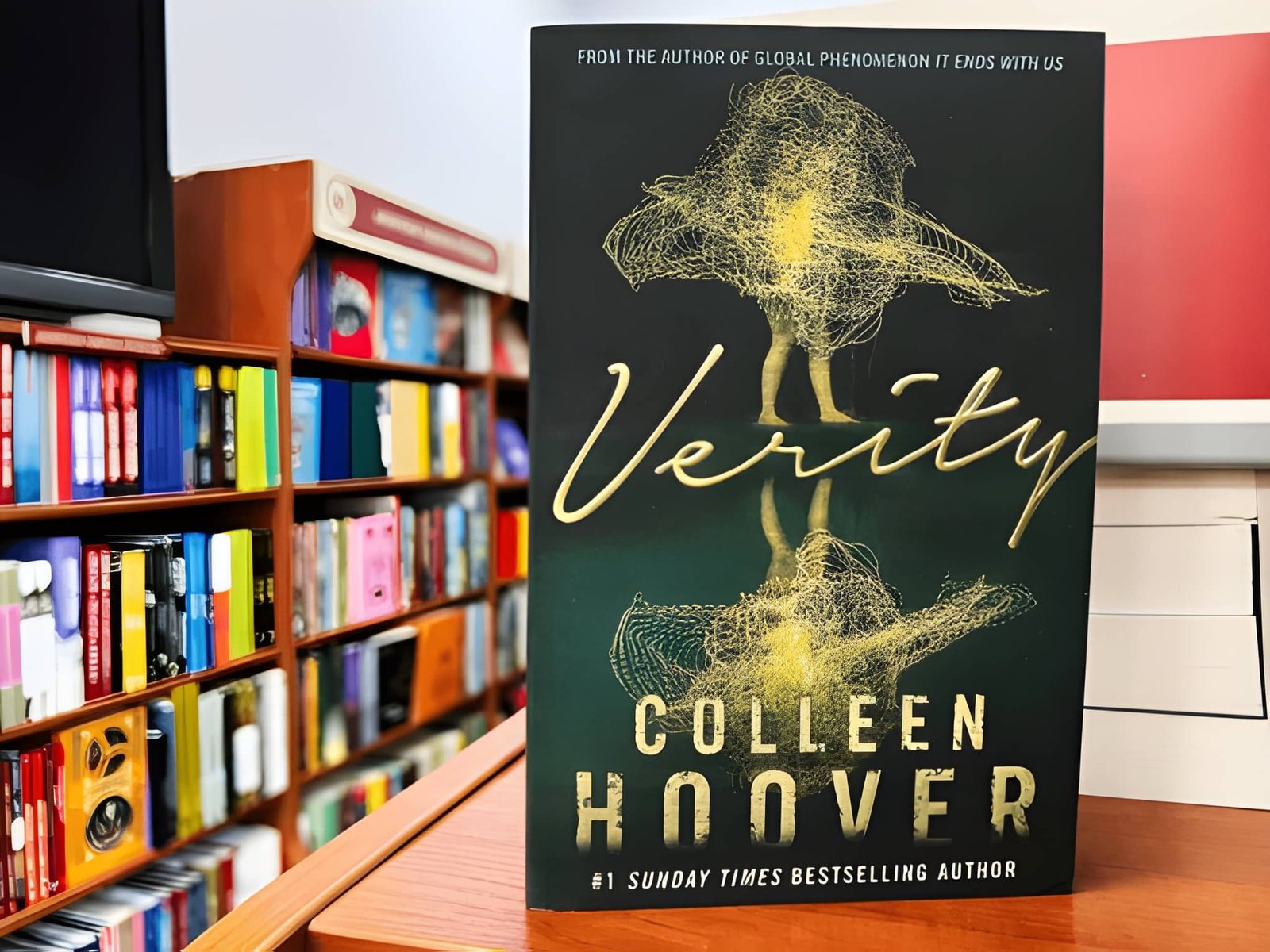
Colleen Hoover’s Verity occupies a unique space in contemporary fiction — it’s part psychological thriller, part dark romance, and entirely unputdownable. Unlike her emotionally raw women’s fiction, Verity operates in a different register: one of dread, obsession, and radical narrative uncertainty. It became one of the most talked-about books on BookTok precisely because it does something most novels never attempt — it makes readers question the story they just finished reading, even after the final page.
If you want to write a book with that kind of grip, you need to understand the mechanics behind it. This guide breaks down the craft, structural choices, and psychological techniques that make Verity work — and shows you how to build something equally compelling.
Understand the Genre You’re Blending
Verity is a genre hybrid, and that’s not accidental. Hoover fuses dark romance — with its morally compromised love interest, forbidden attraction, and emotional intensity — with psychological thriller conventions: the unreliable narrator, the hidden manuscript, mounting dread, and a twist that reframes everything.
Before writing your own book in this mold, understand what each genre promises the reader:
- Dark romance promises emotional danger, intense attraction, and a relationship that exists outside conventional moral comfort zones. Readers come for the heat and the transgression.
- Psychological thriller promises intellectual engagement — the pleasure of figuring out what’s real, who to trust, and what’s being hidden.
When you blend genres, you’re making a contract with two audiences simultaneously. Your job is to honor both promises without letting either one collapse the other. The romance has to be genuinely compelling; the mystery has to be genuinely unsolvable until you’re ready to reveal it.
Build Your Narrative Around an Unreliable Document
The structural masterstroke of Verity is the manuscript — Verity Crawford’s alleged autobiography, which narrator Lowen Ashby discovers and reads in secret. This document becomes the engine of the entire novel, because it operates on multiple levels at once:
- It reveals information the other characters don’t have
- It presents events in a voice radically different from the main narration
- Its reliability is permanently in question
This technique — an embedded unreliable document — is one of the most powerful tools in psychological thriller writing. When done well, it creates a layered narrative where readers are constantly triangulating between what the main narrator observes, what the document claims, and what might actually be true.
To use this technique in your own novel, consider what form the embedded document takes: a journal, a letter, a confession, a recorded transcript, a found manuscript. The format should feel organic to your story world and give the secondary “narrator” a distinct voice that feels authentically different from your protagonist’s.
Craft Two Narrators With Radically Different Voices
In Verity, the contrast between Lowen’s observational present-tense narration and Verity’s florid, confessional manuscript voice is deliberate and essential. Readers must be able to distinguish instantly whose perspective they’re in — not just by section breaks, but by the texture of the prose itself.
Developing two distinct narrative voices requires:
- Different sentence rhythms. A character who is guarded and watchful might write in shorter, more clipped sentences. One who is manipulative and theatrical might write in longer, more ornate constructions.
- Different levels of self-awareness. Your primary narrator might be reliable in observation but blind to her own motivations. Your secondary narrator (in the embedded document) might be hyper-articulate about her inner life — which itself becomes a red flag.
- Different relationships to truth. One narrator tries to see clearly; the other performs clarity while concealing it. This opposition is the engine of your reader’s suspicion.
Practice writing the same scene twice — once from each narrator’s perspective — to feel how their voices diverge and where the gaps in perception emerge.
Engineer Dread Through Setting and Atmosphere
Verity takes place almost entirely in an isolated house belonging to the Crawford family — and the setting functions as a character in its own right. Hoover uses the house’s history, its physical layout, and its emotional weight to generate sustained unease long before anything explicitly threatening occurs.
Atmosphere in psychological thriller writing is built through:
- Specificity over abstraction. Don’t tell readers the house feels wrong. Describe the smell of a room, the way a door doesn’t quite close, the photograph that’s been turned face-down. Concrete, specific details accumulate into dread far more effectively than vague descriptions of “darkness” or “unease.”
- Pacing through withholding. Dread is not the same as shock. Dread is slow. It’s the feeling that something is wrong before you can name it. Structurally, this means giving readers information slightly slower than they want it — enough to keep them reading, not enough to let them rest.
- The contrast of surface normalcy. Some of the most unsettling moments in Verity occur during mundane scenes — meals, conversations, domestic routines — because the reader is carrying the weight of what they’ve read in the manuscript. Use your reader’s knowledge against them.
Write a Love Interest Who Cannot Be Fully Trusted
Jeremy Crawford is not a conventional romance hero. He is grieving, complicated, and — depending on how you read the novel’s ending — potentially complicit in something monstrous. Yet readers are drawn to him and root for Lowen’s relationship with him throughout the book.
This tension is not an accident. To write a morally ambiguous love interest who nonetheless generates genuine romantic investment:
- Give him demonstrable goodness alongside his flaws. Jeremy’s love for his surviving son, his grief, his protectiveness — these are real and visible. Readers can hold his positive qualities alongside their suspicions.
- Keep his interiority opaque. Because the novel is in close third with Lowen, we only see Jeremy from the outside. His thoughts are never directly accessible, which preserves his mystery and prevents the reader from fully exonerating or convicting him.
- Let the attraction feel emotionally logical. Lowen is isolated, professionally compromised, and in a heightened state of psychological vulnerability. Her attraction to Jeremy doesn’t need to be morally tidy — it needs to be emotionally believable.
Dark romance readers understand and expect moral complexity in their love interests. The key is making sure the complexity feels character-driven, not simply shock-driven.
Construct a Twist That Works Retroactively
The ending of Verity — and its infamous ambiguity — works because Hoover plants evidence for both possible interpretations throughout the entire novel. Nothing in the final revelation contradicts what came before; instead, it reframes it. That retroactive coherence is the hallmark of a well-constructed psychological thriller twist.
To build a twist that earns its impact:
- Plant in plain sight. The clues that support your twist should be present from early in the novel, but explained away or easily misread in context. On a second read, they should feel obvious.
- Make the alternative reading equally valid. The most powerful twist isn’t one that simply surprises — it’s one that leaves readers genuinely uncertain which interpretation is true. This requires that both readings are supported by the text.
- Resist the urge to over-explain. Hoover does not resolve the ambiguity for the reader. The final scene presents evidence, but the conclusion is the reader’s to draw. Trusting your audience with that discomfort is what makes the ending linger.
Outline your twist before you write chapter one. Then write backward from it, embedding the seeds of both possible truths into every significant scene.
Use Pacing to Manufacture Compulsive Reading
Verity is the kind of book readers describe as impossible to put down — and that’s a pacing achievement as much as a storytelling one. Hoover structures the novel around relentless micro-tension: each chapter ends at a moment of slight imbalance, a question unanswered, a scene incomplete.
Techniques that drive compulsive reading:
- End chapters on an open beat, not a closed one. A revelation, a new question, a shift in emotional stakes — something that makes stopping feel impossible.
- Vary scene length and intensity. High-tension scenes land harder when preceded by quieter, more domestic ones. The contrast is doing structural work.
- Control information release deliberately. Map out what the reader knows at each chapter and what they’re still missing. Never let them have everything at once — but always give them enough to keep going.
Final Thought: Commit to the Darkness
The writers who try to write books like Verity and fail usually do so because they flinch. They soften the darkness, resolve the ambiguity too early, or make their characters more sympathetic than the story requires.
Verity works because Hoover commits fully to a story where no one — not the narrator, not the love interest, not even the dead woman at the center of it all — is completely trustworthy. That discomfort is the point. Readers don’t just read the book; they argue about it, revisit it, and press it into the hands of everyone they know.
Write the story that makes readers uncomfortable enough to talk about it. That discomfort is your greatest asset.

