
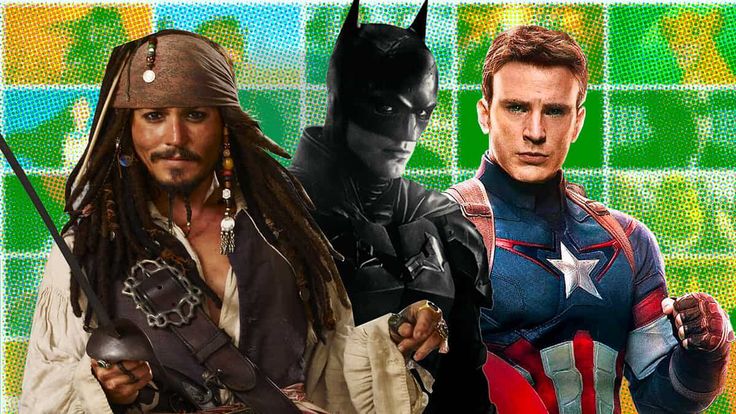
Fictional characters are the soul of storytelling. They make us laugh, cry, think, and feel things we never expected. Across centuries of literature, decades of film and television, generations of animation, and the modern landscape of video games, certain characters have risen above the rest — not just because of the stories they inhabit, but because of who they are and what they represent.
This article celebrates more than 100 of the greatest fictional characters ever created, organized by category. Each one has left a lasting mark on culture, inspired countless fans worldwide, and proven that a truly great character is timeless.
Part 1: Best Fictional Characters From Literature
Books have given us some of the most enduring characters in human history. These figures from novels, novellas, and short fiction have shaped language, culture, and imagination for generations.
- Sherlock Holmes (Arthur Conan Doyle) — The world’s greatest consulting detective, defined by razor-sharp logic, eccentric habits, and an unmatched ability to read people. Holmes set the template for every brilliant detective that followed.
- Elizabeth Bennet (Pride and Prejudice by Jane Austen) — Witty, principled, and refreshingly self-aware, Elizabeth Bennet remains one of fiction’s greatest heroines — a woman who refused to compromise her values for social convenience.
- Atticus Finch (To Kill a Mockingbird by Harper Lee) — A moral compass in a deeply unjust world, Atticus Finch is literature’s most enduring symbol of integrity, courage, and quiet decency.
- Hamlet (Hamlet by William Shakespeare) — The prince of Denmark and perhaps the most analyzed character in all of literature. His philosophical paralysis and search for truth feel as urgent today as they did in the 1600s.
- Jay Gatsby (The Great Gatsby by F. Scott Fitzgerald) — The embodiment of the American Dream’s beauty and tragedy. Gatsby’s relentless pursuit of an idealized past remains one of fiction’s most haunting character studies.
- Hermione Granger (Harry Potter series by J.K. Rowling) — Brilliant, brave, and fiercely loyal, Hermione redefined what a female protagonist in children’s fantasy could be — and inspired a generation of readers to take pride in being the smartest person in the room.
- Don Quixote (Don Quixote by Miguel de Cervantes) — The original fictional antihero, a delusional knight whose absurd adventures mask a profound meditation on idealism, reality, and the human need for meaning.
- Robinson Crusoe (Robinson Crusoe by Daniel Defoe) — One of fiction’s first great survivor characters. Crusoe’s resourcefulness and isolation on a desert island spawned an entire genre of survival storytelling.
- Anna Karenina (Anna Karenina by Leo Tolstoy) — A woman trapped between passion and society, Anna’s story is one of the most psychologically rich character portraits in all of world literature.
- Holden Caulfield (The Catcher in the Rye by J.D. Salinger) — The original disaffected teenager. Holden’s voice — raw, contradictory, and achingly real — captured adolescent alienation in a way no character had before.
- Huck Finn (Adventures of Huckleberry Finn by Mark Twain) — A runaway boy navigating the moral complexities of pre-Civil War America. Huck’s journey toward empathy and justice is one of American literature’s greatest arcs.
- Long John Silver (Treasure Island by Robert Louis Stevenson) — The charismatic, morally ambiguous pirate who set the template for every lovable villain in adventure fiction. Silver is dangerous, funny, and impossible not to like.
- Heathcliff (Wuthering Heights by Emily Bronte) — One of literature’s darkest romantic figures. Heathcliff’s obsessive love and consuming bitterness make him as compelling as he is destructive.
- Jane Eyre (Jane Eyre by Charlotte Bronte) — A governess with an unbreakable moral backbone. Jane’s quiet determination to be treated with dignity made her a radical figure in Victorian fiction and a timeless heroine.
- Raskolnikov (Crime and Punishment by Fyodor Dostoevsky) — A student who commits murder to test his own philosophical theories and then unravels under the weight of guilt. One of fiction’s most searching portraits of the criminal mind.
- Edmond Dantes (The Count of Monte Cristo by Alexandre Dumas) — Wrongly imprisoned, brilliantly escaped, and ruthlessly dedicated to revenge. The Count of Monte Cristo remains the definitive fictional embodiment of justice served cold.
- Frodo Baggins (The Lord of the Rings by J.R.R. Tolkien) — The unlikely hero who carried the weight of the world — literally — on a journey that celebrated ordinary courage over exceptional strength.
- Gandalf (The Lord of the Rings by J.R.R. Tolkien) — The archetypal wise wizard whose mysterious power and gentle guidance shaped the entire fantasy mentor figure. He shall not pass into obscurity.
- Dorian Gray (The Picture of Dorian Gray by Oscar Wilde) — A beautiful young man whose portrait ages in his place as he pursues a life of moral corruption. Wilde’s most fascinating creation and a devastating critique of vanity.
- Ebenezer Scrooge (A Christmas Carol by Charles Dickens) — The miser transformed. Scrooge’s redemption story is so perfectly constructed that his name has become a word in the English language.
Part 2: Best Fictional Characters From Film
Cinema has produced characters so vivid and so memorable that they feel like real people. These are the figures from the big screen who have become part of the shared cultural memory of the modern world.
- Indiana Jones (Indiana Jones franchise) — The adventurous archaeologist with a whip and a fear of snakes became the definitive action hero of the 1980s — equal parts brilliant scholar and reckless adventurer.
- Darth Vader (Star Wars franchise) — One of cinema’s greatest villains, whose tragic backstory as Anakin Skywalker transformed him from a simple antagonist into one of the most complex figures in modern mythology.
- Ellen Ripley (Alien franchise) — The blueprint for the modern female action hero. Ripley’s combination of intelligence, resourcefulness, and ferocious maternal instinct made her one of the most important characters in science fiction cinema.
- The Joker (The Dark Knight) — Heath Ledger’s portrayal transformed Batman’s clown villain into cinema’s most unsettling portrait of chaos as philosophy. A character impossible to look away from.
- Forrest Gump (Forrest Gump) — A gentle man with a simple heart who accidentally wandered through fifty years of American history. Forrest works because kindness, not cleverness, is his superpower.
- Tony Montana (Scarface) — The ultimate rise-and-fall gangster. Montana’s ferocious ambition and equally ferocious self-destruction made him a template for every subsequent crime film protagonist.
- Michael Corleone (The Godfather) — The reluctant heir who becomes what he swore he never would. Michael’s corruption across the Godfather trilogy is one of cinema’s most carefully constructed character tragedies.
- Holly Golightly (Breakfast at Tiffany’s) — Audrey Hepburn’s luminous portrayal of a woman running from her past while pretending to run toward glamour. Charming, melancholy, and deeply human.
- Charles Foster Kane (Citizen Kane) — Orson Welles’ media mogul whose entire life amounts to a search for what he lost in childhood. The mystery of Rosebud is cinema’s most famous character riddle.
- Vito Corleone (The Godfather) — Marlon Brando’s patriarch of the Corleone family — soft-spoken, terrifyingly powerful, and possessed of a warped but genuine love for his family.
- Hannibal Lecter (The Silence of the Lambs) — The brilliant, cultured cannibal who became one of cinema’s most mesmerizing villains. Lecter’s refinement makes his horror all the more effective.
- James Bond (James Bond franchise) — The definitive suave spy, reimagined by six actors over six decades. Bond’s endurance speaks to a cultural fantasy of competence, confidence, and consequence-free adventure.
- Ferris Bueller (Ferris Bueller’s Day Off) — The patron saint of skipping school. Ferris’s philosophy — life moves fast, pay attention — resonated with an entire generation and still does.
- Norman Bates (Psycho) — Alfred Hitchcock’s motel keeper redefined the horror villain by making him sympathetic, ordinary, and deeply disturbed. Psycho invented the psychological thriller.
- T-800 / The Terminator (The Terminator franchise) — A machine programmed to kill that becomes, in later films, a protector with something approaching paternal feeling. One of science fiction cinema’s most iconic figures.
- Clarice Starling (The Silence of the Lambs) — A young FBI trainee navigating a world of male authority and genuine horror with intelligence and quiet courage. Clarice is one of cinema’s finest female protagonists.
- Travis Bickle (Taxi Driver) — A disturbed Vietnam veteran whose disconnection from society leads him toward vigilante violence. Travis remains one of cinema’s most uncomfortable and compelling anti-heroes.
- Katniss Everdeen (The Hunger Games franchise) — A reluctant revolutionary whose survival instinct and fierce protectiveness made her the defining female action hero of her generation.
- Maximus (Gladiator) — A Roman general enslaved and forced into the arena, whose dignity under oppression turned him into one of cinema’s great tragic heroes.
- The Dude (The Big Lebowski) — Jeffrey Lebowski, the most relaxed man in Los Angeles, who just wants his rug back. The Dude’s laid-back philosophy became a genuine cultural touchstone.
Part 3: Best Fictional Characters From Television
The golden age of television produced some of the most psychologically complex characters ever written. These figures from the small screen have inspired as much analysis and devotion as any literary or cinematic counterpart.
- Walter White (Breaking Bad) — A chemistry teacher turned drug kingpin whose transformation from desperate father to Heisenberg is the defining character arc of prestige television’s golden era.
- Tony Soprano (The Sopranos) — The mob boss in therapy who kicked off prestige TV’s obsession with the morally compromised antihero. Tony was funny, terrifying, and heartbreakingly human all at once.
- Don Draper (Mad Men) — A Madison Avenue ad man living a stolen identity, whose surface perfection concealed a complete inner void. Don Draper is television’s most elegant character study in self-invention and emptiness.
- Tyrion Lannister (Game of Thrones) — The wittiest and most self-aware character in Westeros. Tyrion’s intelligence, cynicism, and surprising compassion made him the fan favourite of an era-defining fantasy series.
- Omar Little (The Wire) — A shotgun-toting, code-bound stick-up man who robbed drug dealers and whistled nursery rhymes. Omar is one of television’s most original and morally complex creations.
- Fleabag (Fleabag) — Phoebe Waller-Bridge’s unnamed protagonist broke the fourth wall and every emotional barrier simultaneously. Raw, funny, and devastating in equal measure.
- Cersei Lannister (Game of Thrones) — A queen whose intelligence was perpetually undermined by the limitations placed on women in her world. Cersei’s bitterness is entirely understandable — and she is still terrifying.
- Daenerys Targaryen (Game of Thrones) — The Mother of Dragons whose arc from enslaved girl to liberator to tyrant remains one of television’s most ambitious — and most debated — character journeys.
- Carrie Bradshaw (Sex and the City) — A New York columnist who built an empire on shoes and self-reflection. Carrie’s combination of romanticism and self-absorption made her endlessly watchable and endlessly discussed.
- Gregory House (House M.D.) — A brilliant, drug-addicted, misanthropic diagnostician who solved medical mysteries and alienated everyone around him. House is television’s sharpest portrait of genius as a burden.
- Dexter Morgan (Dexter) — A forensic blood spatter analyst who moonlights as a serial killer targeting other killers. Dexter’s moral code, however warped, made audiences root for a murderer for eight seasons.
- Lorelai Gilmore (Gilmore Girls) — Quick-witted, coffee-obsessed, and wonderfully complicated. Lorelai’s rapid-fire dialogue and unconventional motherhood made her one of television’s most beloved female characters.
- Rust Cohle (True Detective Season 1) — A nihilistic detective whose bleak philosophy and relentless intelligence made the first season of True Detective feel like literature. Matthew McConaughey brought him to haunting life.
- Niles Crane (Frasier) — The fussy, romantically tortured younger Crane brother whose unrequited love for Daphne Moon was one of TV comedy’s most perfectly sustained running storylines.
- Barney Fife (The Andy Griffith Show) — The bumbling but earnest deputy whose outsized self-importance and genuine heart made him one of American television comedy’s most enduring figures.
- The Mandalorian (Din Djarin) (The Mandalorian) — A stoic bounty hunter bound by a strict code who becomes the adoptive protector of a small, extremely powerful child. Modern Star Wars mythology at its best.
- Cosima Niehaus (Orphan Black) — The science-obsessed, dreadlocked clone scientist who brought warmth and intellectual curiosity to one of television’s most ambitious high-concept series.
- Bojack Horseman (Bojack Horseman) — A washed-up animated sitcom star navigating depression, addiction, and self-destruction. Bojack is one of television’s most honest and unflinching portraits of mental illness.
- Eleven (Stranger Things) — A telekinetic girl raised in a government lab who discovers friendship, family, and the terrifying power of her own abilities. One of modern television’s most emotionally compelling young characters.
- Jean-Luc Picard (Star Trek: The Next Generation) — The most humane captain in the Federation, whose quiet authority, philosophical depth, and commitment to diplomacy over force made him a model of dignified leadership.
Part 4: Best Fictional Characters From Animation
Animation has produced some of storytelling’s most emotionally resonant and culturally significant characters. These figures transcend the medium and live in the hearts of audiences of all ages.
- Homer Simpson (The Simpsons) — Television’s greatest animated everyman. Homer’s combination of ignorance, love, and accidental wisdom made him a thirty-year mirror for American domestic life.
- Bugs Bunny (Looney Tunes) — The trickster rabbit who outsmarted everyone and never broke a sweat. Bugs Bunny defined cool confidence in animation for generations and influenced comedic timing across the entire medium.
- Mickey Mouse (Disney) — The original animated superstar, whose optimistic personality and iconic design launched an entertainment empire and became one of the most recognized symbols on earth.
- Simba (The Lion King) — A lion cub whose journey from trauma and exile to reclaiming his destiny distilled the hero’s journey into one of animation’s most emotionally powerful films.
- Ariel (The Little Mermaid) — A mermaid princess whose yearning for a world beyond her own helped define the Disney Renaissance and inspired generations of young dreamers.
- Shrek (Shrek franchise) — An ogre who became an unlikely fairytale hero and a gleeful deconstruction of every Disney princess trope. Shrek’s self-acceptance message landed harder than anyone expected.
- WALL-E (WALL-E) — A small garbage-compacting robot whose gentle love story and environmentalist allegory made him one of Pixar’s most affecting creations — without a word of dialogue for the first act.
- Elsa (Frozen) — A queen with ice powers and an anthem that became a cultural phenomenon. Elsa’s story of self-acceptance and the release of shame resonated with audiences worldwide.
- Aang (Avatar: The Last Airbender) — The last airbender whose playful spirit and deep moral conviction drove one of animated television’s most acclaimed and emotionally complex series.
- Zuko (Avatar: The Last Airbender) — A scarred prince whose redemption arc from antagonist to hero is widely considered one of the finest character journeys in animated history.
- Gollum (The Lord of the Rings / The Hobbit) — The tragic creature corrupted by the One Ring whose split personality — between the remnants of Smeagol and the consuming obsession of Gollum — is one of fantasy’s greatest character creations.
- Buzz Lightyear (Toy Story franchise) — A space ranger action figure who goes from delusional self-importance to genuine heroism, and whose friendship with Woody is the emotional core of one of animation’s greatest franchises.
- Woody (Toy Story franchise) — A cowboy doll wrestling with obsolescence, jealousy, and loyalty. Woody’s emotional journey across four films is among Pixar’s most carefully constructed character arcs.
- Hiro Hamada (Big Hero 6) — A grieving teenage genius who channels loss into heroism, with his inflatable healthcare robot Baymax at his side. One of Disney’s most quietly moving protagonists.
- Marinette Dupain-Cheng / Ladybug (Miraculous Ladybug) — A clumsy, kind-hearted Parisian teenager who transforms into a confident superhero. Ladybug’s duality and persistent optimism made her a global animated sensation.
- Optimus Prime (Transformers) — The noble leader of the Autobots whose unwavering commitment to protecting humanity and his sense of sacrifice made him one of animation’s most enduring heroes.
- Eric Cartman (South Park) — Television’s most gleefully offensive animated villain-protagonist. Cartman’s combination of manipulative genius and moral bankruptcy has made him a darkly compelling satirical creation for nearly thirty years.
- Stewie Griffin (Family Guy) — A homicidal infant with a British accent, a genius intellect, and a complicated relationship with his own identity. Stewie works because the joke never gets old.
- Samurai Jack (Samurai Jack) — A noble samurai warrior trapped in a dystopian future, searching for a way home. Jack’s quiet dignity and extraordinary fight sequences made him one of Cartoon Network’s greatest heroes.
- Moana (Moana) — A Polynesian chief’s daughter who sails the open ocean to save her island, guided by her ancestors and her own unshakeable sense of self. One of Disney’s most self-possessed heroines.
Part 5: Best Fictional Characters From Video Games
Video games have evolved into one of storytelling’s most powerful mediums, producing characters with emotional depth and cultural impact equal to any book or film. These are the icons who defined gaming’s narrative ambitions.
- Master Chief (John-117) (Halo franchise) — The armored super-soldier who became the face of Xbox gaming. Master Chief’s stoic efficiency and surprisingly tender moments with Cortana made him a science fiction icon.
- Lara Croft (Tomb Raider franchise) — The archaeologist-adventurer who became gaming’s first major female action icon, later reimagined as a grittier, psychologically complex survivor in the modern reboot trilogy.
- Geralt of Rivia (The Witcher franchise) — A monster hunter navigating a morally grey world where humans are often more dangerous than the creatures he hunts. Geralt’s dry wit and code of pragmatic ethics made him one of gaming’s most beloved protagonists.
- Kratos (God of War franchise) — The Ghost of Sparta whose journey from rage-fueled vengeance against the Greek gods to measured, reluctant fatherhood in Norse mythology is one of gaming’s greatest character evolutions.
- Joel Miller (The Last of Us) — A survivor in a post-apocalyptic world whose bond with a teenage girl named Ellie reawakened his capacity for love — and led him to make one of gaming’s most morally complex decisions.
- Ellie (The Last of Us) — A teenager immune to the cordyceps plague whose journey from ward to hunter to something harder to define across two games is gaming’s most emotionally demanding character study.
- Arthur Morgan (Red Dead Redemption 2) — A outlaw seeking redemption in a dying era of the American West. Arthur’s slow reckoning with the consequences of his life is one of gaming’s finest narrative achievements.
- Link (The Legend of Zelda franchise) — The eternal hero of Hyrule, reborn across centuries to protect a kingdom and a princess. Link’s silent heroism and iconic design have made him one of gaming’s most recognizable figures.
- Cloud Strife (Final Fantasy VII) — A mercenary with a stolen identity and a massive sword who became the face of Japanese RPG storytelling. Cloud’s psychological fragility made him one of gaming’s most unexpectedly vulnerable protagonists.
- Nathan Drake (Uncharted franchise) — The charismatic treasure hunter whose wise-cracking charm and genuine emotional depth made the Uncharted series feel like a playable blockbuster film.
- Commander Shepard (Mass Effect trilogy) — A fully customizable hero whose relationships, decisions, and sacrifices across three games created one of the most personal and emotionally resonant experiences in RPG history.
- GLaDOS (Portal franchise) — The passive-aggressive artificial intelligence who turned a puzzle game into a dark comedy masterpiece. GLaDOS’s deadpan menace and unexpected vulnerability made her one of gaming’s greatest characters.
- Aloy (Horizon franchise) — A hunter in a world reclaimed by nature and populated by mechanical beasts, whose search for identity uncovered secrets about the fate of civilization. Aloy is one of modern gaming’s finest heroines.
- Solid Snake (Metal Gear Solid franchise) — The legendary operative whose increasingly surreal espionage missions explored themes of identity, war, and free will. Solid Snake is gaming’s most iconic stealth hero.
- Sephiroth (Final Fantasy VII) — The silver-haired, one-winged angel who became gaming’s most iconic villain. Sephiroth’s tragic backstory and theatrical menace made him the definitive JRPG antagonist.
Bonus: 15 More Iconic Fictional Characters Worth Celebrating
The world of fiction is too vast to contain in any single list. Here are fifteen more characters who absolutely deserve recognition alongside the very best.
- Odysseus (The Odyssey by Homer) — The original clever hero, whose ten-year journey home defined the adventure narrative for all of Western literature.
- Dracula (Dracula by Bram Stoker) — The Count from Transylvania whose influence on horror, gothic fiction, and popular culture is practically incalculable.
- Frankenstein’s Monster (Frankenstein by Mary Shelley) — A creature abandoned by his creator and rejected by humanity, whose tragedy asks the most fundamental questions about what it means to be human.
- Sherlock Holmes’ nemesis Professor Moriarty (Arthur Conan Doyle) — The Napoleon of Crime, and arguably the template for every criminal mastermind in the century of detective fiction that followed.
- Ahab (Moby-Dick by Herman Melville) — A captain consumed by obsession to the point of self-destruction. Ahab’s monomania is one of American literature’s most powerful portraits of ego destroying everything it touches.
- Attila (Hiro Protagonist) (Snow Crash by Neal Stephenson) — A pizza delivery driver and hacker in a near-future America who helped invent the modern concept of the virtual reality Metaverse. Science fiction at its most prescient.
- Samwise Gamgee (The Lord of the Rings by J.R.R. Tolkien) — The loyal gardener who carried his friend up a volcano when the friend could no longer carry himself. Sam is the quiet heart of Tolkien’s entire mythology.
- Luna Lovegood (Harry Potter series by J.K. Rowling) — Dreamy, unconventional, and completely sincere. Luna showed that the strangest person in the room is often the bravest one.
- The Phantom of the Opera (The Phantom of the Opera by Gaston Leroux) — A disfigured musical genius hiding beneath a Paris opera house, whose obsessive love became one of gothic romance’s most enduring stories.
- Daffy Duck (Looney Tunes) — The egotistical, sputtering rival to Bugs Bunny who somehow became just as beloved. Daffy’s jealousy and indignation are comedy in its purest animated form.
- Ellen (Saga of Elven Love) (The Witcher / Saga by Andrzej Sapkowski) — Ciri, the child of destiny pursued by empires, whose coming-of-age across Sapkowski’s novels is one of fantasy literature’s most ambitious female character arcs.
- Alex DeLarge (A Clockwork Orange by Anthony Burgess) — A teenage sociopath who loved Beethoven and ultra-violence in equal measure. Alex’s unreliable narration made Burgess’s novel one of the twentieth century’s most disturbing and compelling reads.
- Patrick Bateman (American Psycho by Bret Easton Ellis) — A Wall Street banker who may or may not be a serial killer. Bateman’s unreliable interiority is a savage satirical portrait of 1980s materialism and masculine emptiness.
- Ahsoka Tano (Star Wars: The Clone Wars) — A Jedi Padawan who left the Order, survived Order 66, and became one of the most beloved characters in the entire Star Wars expanded universe.
- V (V for Vendetta by Alan Moore) — An anarchist revolutionary in a fascist Britain, whose identity beneath the Guy Fawkes mask is less important than what the mask represents. V became a symbol that escaped the page entirely.
Final Thoughts: What Makes a Fictional Character Truly Unforgettable?
Looking across more than a century of storytelling — from Dickens to Dostoevsky, from Hitchcock to HBO, from Pixar to PlayStation — one truth becomes clear: the greatest fictional characters endure because they are honest. They reflect something true about what it means to be human, even when they are hobbits, robots, dragons, or space marines.
They make us braver, sadder, wiser, and more curious about the world. They remind us that stories are not just entertainment — they are how we understand ourselves. Whether your favourite character on this list is a Victorian detective, a reluctant hobbit, a grieving cowboy, or a small garbage-collecting robot floating alone in space, they earned their place here by doing the same thing: making you feel something real.
And that is why fiction matters. These characters do not exist — and yet, somehow, they are some of the most real people any of us have ever known.

